How a 'Poisoned Baby Cabbage' Scandal Unfolded on Chinese Social Media
A Chinese couple's claim of being poisoned by online-purchased baby cabbage evolved from a food safety concern to a domestic violence case, before revealing itself as a deliberate scam, exposing the fragility of online truth and the power of public emotion in a dramatic series of reversals.
28 February 2026
How a 'Poisoned Baby Cabbage' Scandal Unfolded on Chinese Social Media
In the fast-paced world of Chinese social media, a seemingly ordinary story about a couple who claimed to have been poisoned by a 17-yuan ($2.40) bag of baby cabbage became a national sensation, marked by dramatic reversals that exposed the fragility of online truth and the power of public emotion.
The saga began in late January 2026 when a couple in Zhejiang province, China, claimed they had been hospitalized after eating baby cabbage purchased online. The initial reports, amplified by media outlets, painted a picture of a terrifying food safety crisis, with headlines suggesting the vegetables had been contaminated by rodenticide from old newspapers used for packaging.
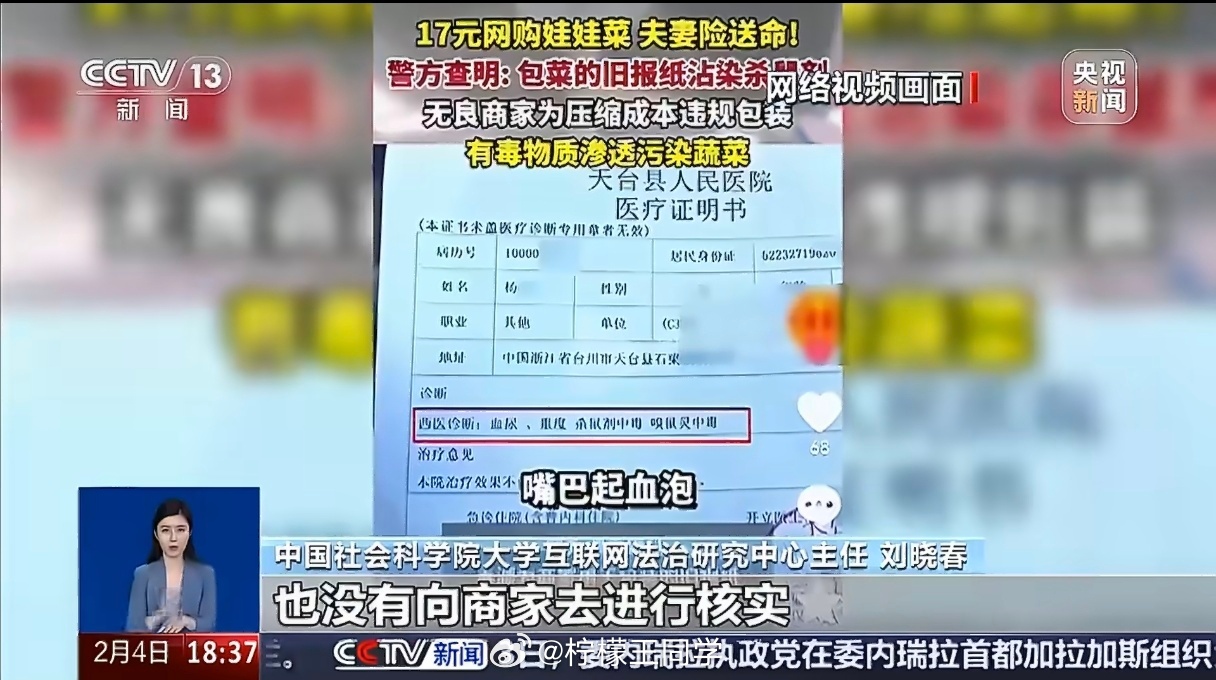
Translation: "17 yuan online baby cabbage, couple'slife in danger! Police investigation: Old newspapers used for packaging are contaminated with rodenticide. Unscrupulous merchants use toxic substances to pollute vegetables to save costs. Medical certificate from Tiantai County People's Hospital shows diagnosis of rodenticide poisoning."
This first narrative quickly gained traction, sparking widespread outrage and concern over online food safety. The couple's story, complete with graphic images of their medical conditions, resonated deeply with a public already wary of food safety scandals. Many users expressed sympathy and called for justice against the alleged negligent merchant.
However, the story took its first dramatic turn just days later. On February 3, 2026, some media outlets reported that the poisoning was actually an act of domestic violence, claiming the husband had poisoned his wife. This new twist transformed the narrative from a consumer protection issue into a sensational crime story, with many users condemning the husband and speculating about the couple's troubled relationship.
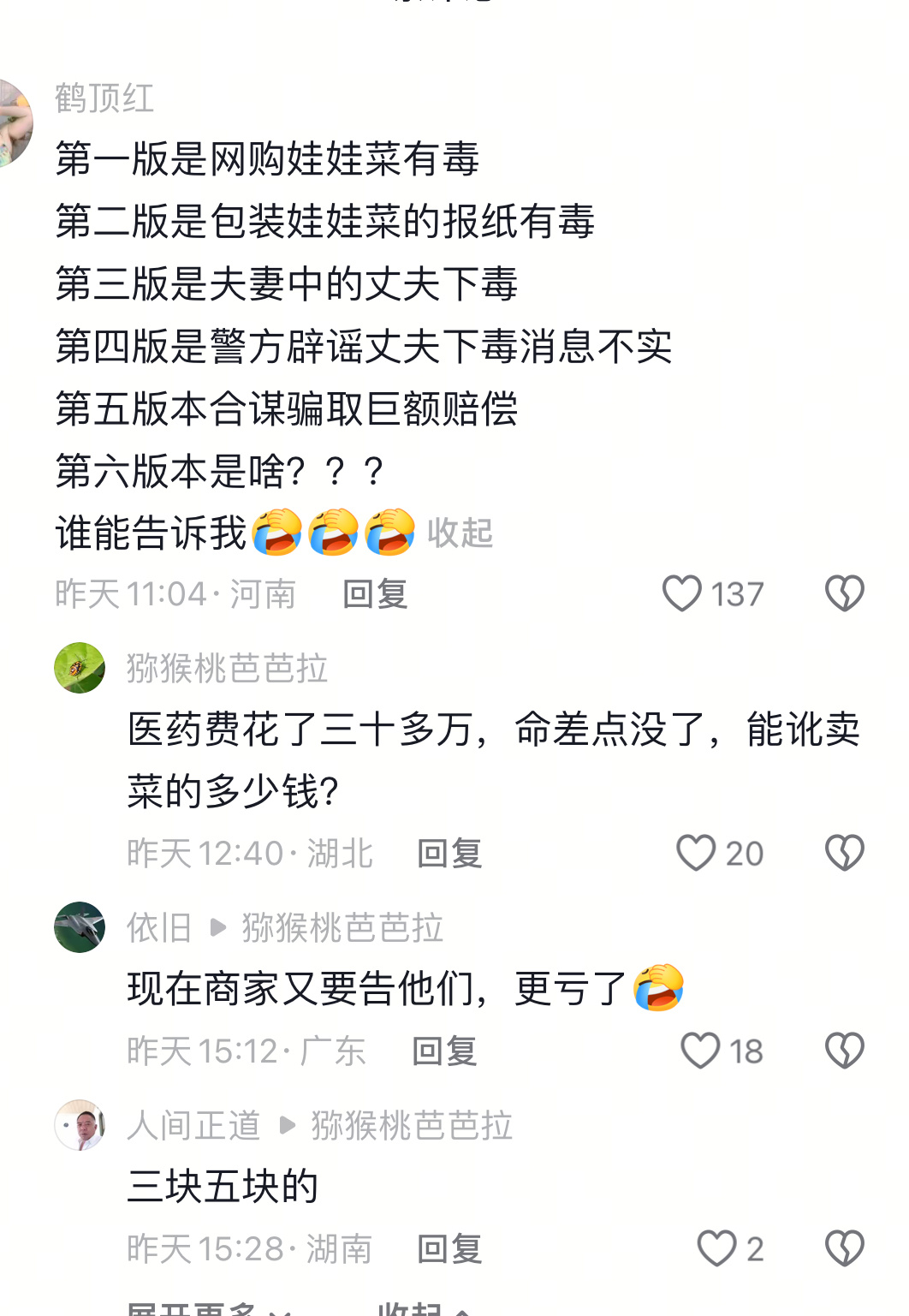
Translation: "Version 1: Online baby cabbage is poisonous. Version 2: The newspaper packaging the baby cabbage is poisonous. Version 3: The husband in the couple poisoned [the wife]. Version 4: Police refute the husband poisoning news as untrue. Version 5: The couple conspired to defraud huge compensation. What is Version 6??? Who can tell me, who would poison themselves with rat poison?"
The public reaction was swift and divided. While some continued to express sympathy for the wife, others shifted their anger toward the husband, with discussions about domestic abuse and relationship dynamics dominating social media feeds. The rapid succession of conflicting reports created confusion, with many users expressing frustration at the lack of clear information.
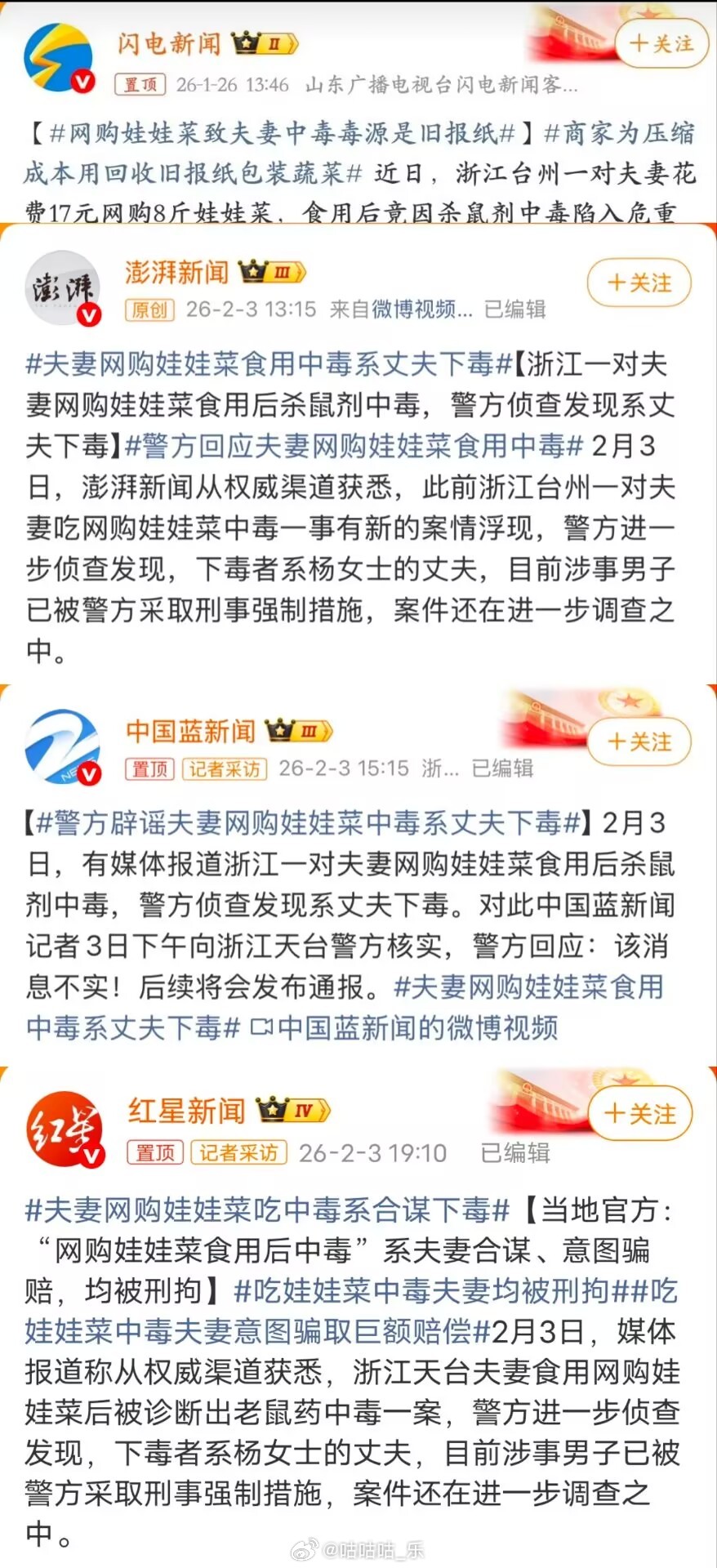
Translation: "[News reports about the couple buying baby cabbage online and getting poisoned, with the poisoner being the husband] [Police response: The couple buying baby cabbage online and getting poisoned, the poisoner is the husband] On February 3, some media reported that a couple in Zhejiang bought baby cabbage online and were poisoned by rodenticide. Police investigation found the poisoner was the husband. The involved man has been taken criminal coercive measures by police, and the case is still under further investigation."
But the most shocking revelation was yet to come. Later the same day, authorities in Tiantai county released an official statement that stunned the nation: the entire incident was a deliberate scam orchestrated by the couple themselves. They had allegedly conspired to poison themselves with rodenticide in a scheme to extort money from the online seller and platform.
Translation: "'Online baby cabbage poisoning' reverses again - couple conspired, intended to defraud. Official announcement: Both have been criminally detained"
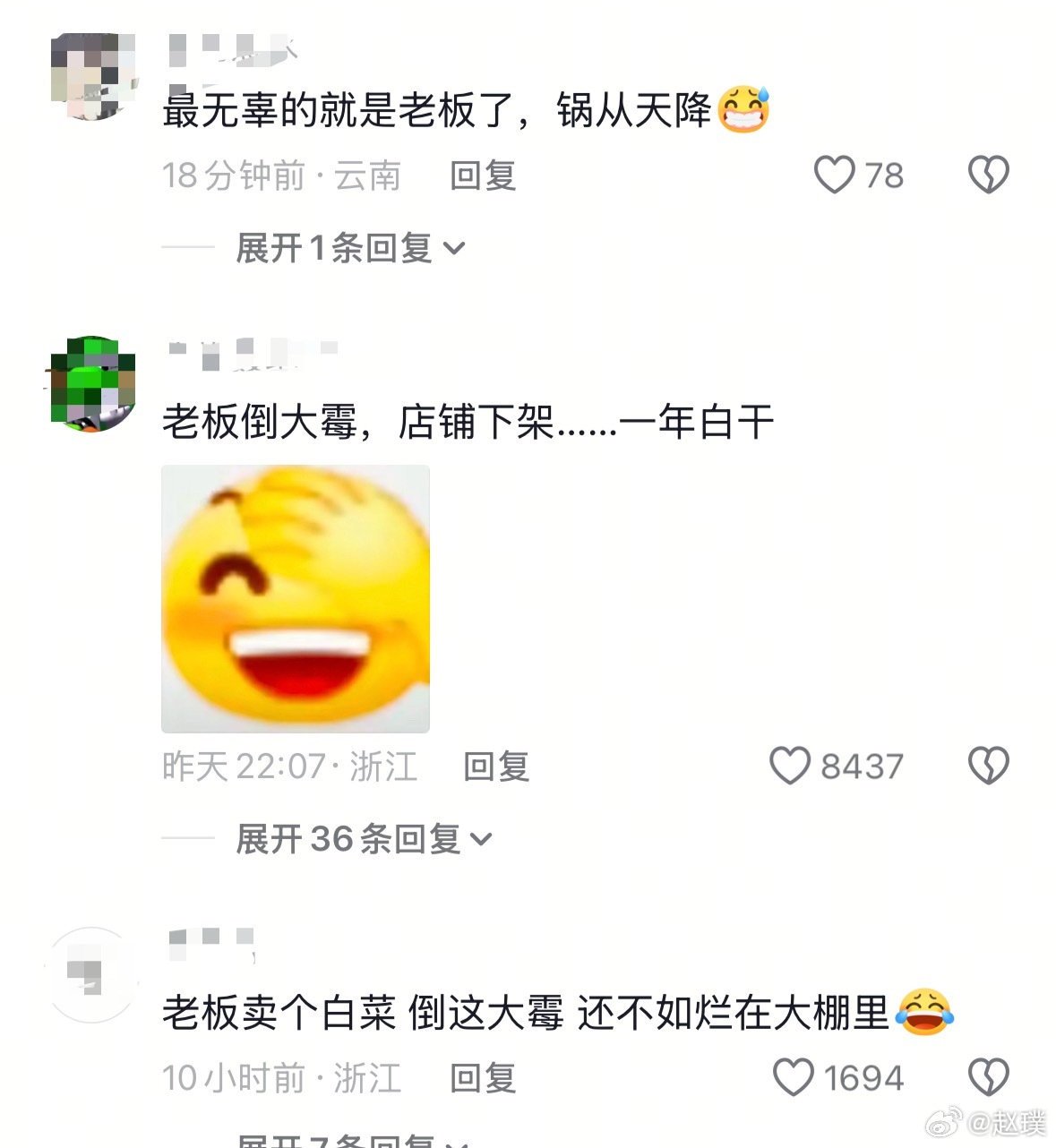
The couple was subsequently detained on suspicion of extortion. This final twist completely upended public opinion, with many users expressing outrage at being manipulated and sympathy for the innocent merchant who had been wrongly accused and subjected to intense online harassment.

Translation: "The most innocent is the boss, disaster from heaven [laughing emoji with sweat]" "The boss is in big trouble, the store is closed... worked for nothing all year [laughing emoji]" "The boss selling cabbage encountered such a disaster, might as well burn in the greenhouse [crying laughing emoji]"
The case became a focal point for discussions about media responsibility, the dangers of spreading unverified information, and the emotional volatility of online discourse. Many commentators noted how the public's initial sympathy had been exploited, and how the rapid reversals had damaged trust in both online information and legitimate consumer complaints.
As the dust settled, the incident left several victims: the couple facing legal consequences for their actions, the merchant whose reputation and livelihood were destroyed by the false accusations, and the public whose trust in online information had been further eroded. The baby cabbage that started it all had become a symbol of the complex and often treacherous landscape of modern digital communication.
The case served as a stark reminder that in an age of instant information and viral stories, the line between truth and fabrication can become dangerously thin, with real-world consequences for all involved.
Related Articles

Why Weibo and Xiaohongshu Are Talking About Japan's Deep-Sea Rare Earth—But Saying Very Different Things
By Trending on Weibo
News & Politics
2 Mar 2026
How Iran Nuclear Negotiations Unfolded on Chinese Social Media
By Trending on Weibo
News & Politics
28 Feb 2026

How a Gold Bracelet Sale by a Minor Unfolded on Chinese Social Media
By Trending on Weibo
News & Politics
28 Feb 2026
How a 'Poisoned Baby Cabbage' Scandal Unfolded on Chinese Social Media
By Trending on Weibo
News & Politics
28 Feb 2026

Bill Gates Denies Epstein Allegations as Ex-Wife Melinda Speaks Out
By Trending on Weibo
News & Politics
17 Feb 2026