Why Weibo and Xiaohongshu Are Talking About Japan's Deep-Sea Rare Earth—But Saying Very Different Things
When Japan announced it had successfully extracted rare earth-rich mud from 6,000 meters below the Pacific Ocean, the news ignited a firestorm on China’s Weibo—but barely registered on Xiaohongshu. The contrast in reactions reveals how platform audiences and framing shape the discourse around geopolitical issues, with Weibo users dissecting the claims as political theater and Xiaohongshu users ignoring them entirely.
2 March 2026
Why Weibo and Xiaohongshu Are Talking About Japan's Deep-Sea Rare Earth—But Saying Very Different Things
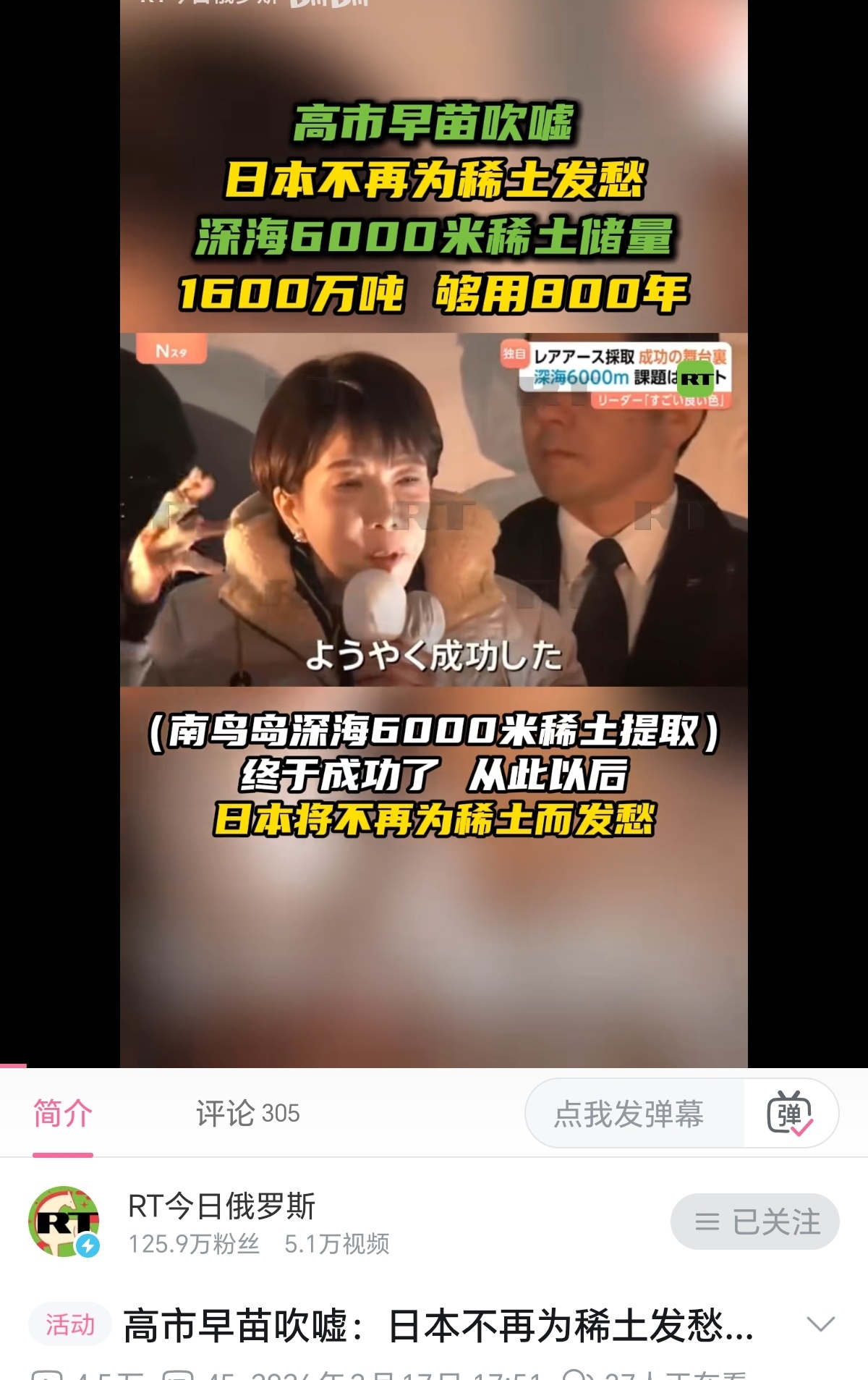
When Japan’s Prime Minister Takashi Kishida declared in February 2026 that his country had “succeeded” in extracting rare earth-rich mud from 6,000 meters below the Pacific Ocean—claiming the find could end Japan’s reliance on Chinese rare earths—the news sparked a frenzy on China’s Weibo. But on Xiaohongshu, the story barely registered. The contrast in reactions highlights how platform audiences and framing shape the discourse around geopolitical issues, with Weibo users dissecting the claims as political theater and Xiaohongshu users ignoring them entirely.
Japan’s Bold Claim—and Its Flaws
Japan’s announcement centered on a test extraction near Minami-Torishima (South Bird Island), where the government claimed to have recovered mud containing rare earth elements (REEs)—critical for electronics, electric vehicles, and defense. Kishida hailed the find as a “major breakthrough,” noting the estimated 16 million tons of reserves could supply Japan for 800 years. But the excitement was short-lived: experts and Weibo users quickly pointed out the project’s massive flaws.
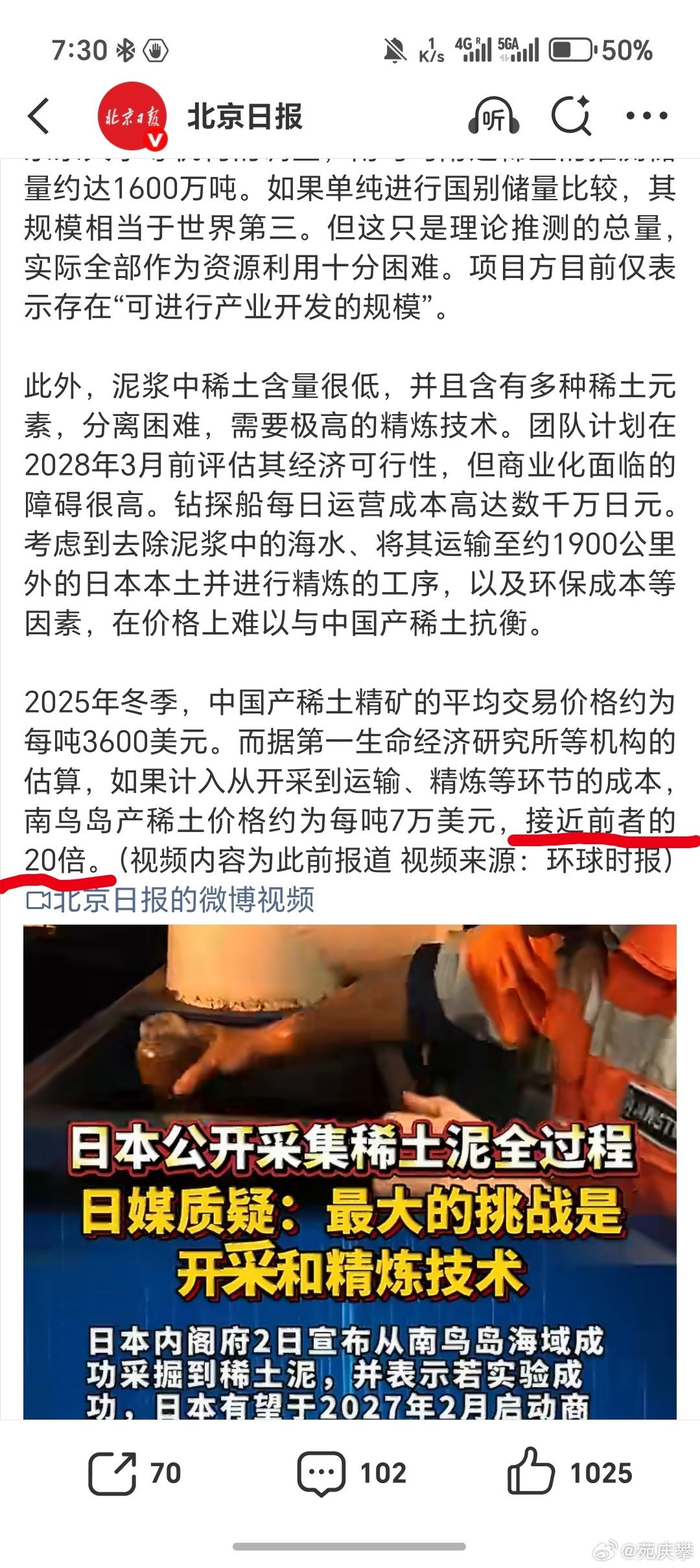
The test was just that—a technical success, not a commercial one. The mud’s rare earth concentration is extremely low, and separating the elements requires complex, expensive refining. As one Weibo post noted, the total cost of extracting and processing the mud could be 20 times higher than China’s rare earth prices. “Japan’s rare earth cost is 20 times China’s transaction price—so we can raise exports to Japan by 10 times and still give them a 50% discount! 😂😂😂” wrote user 苑庆攀, summing up the skepticism.
Weibo: Skepticism and Political Satire
Weibo, China’s Twitter-like platform, became a hub for critical analysis. Users mocked Japan’s motives, linking the announcement to the country’s upcoming elections. “This is just election posturing,” said user 扬帆向北. “The reality is far more bleak: low content, high costs, and environmental risks. The short-term格局 (pattern) won’t change.”
Another user, 应旺, revealed that the announcement was rushed to coincide with the election: “The project team was forced to release results early by a government minister. The 16 million tons of reserves are just theoretical—actual development is extremely difficult.” The post included a screenshot of a Weibo article titled “The Truth Behind Japan’s Rare Earth Mud Extraction: Exaggerated for Elections.”
China’s Foreign Ministry added to the skepticism with a dry response: “We’ve noticed Japan has been reporting this for years,” said spokesperson Lin Jian. The line, which implied Japan’s claims were repetitive and unconvincing, became a meme on Weibo. “The Foreign Ministry’s response is genius—‘we’ve noticed’ means ‘we’re not impressed,’” wrote user 王虎的舰桥.
Xiaohongshu: Silence on Geopolitics
In stark contrast, Xiaohongshu—China’s lifestyle-focused platform—had almost no engagement with the story. The two posts related to the topic were about unrelated issues: one about Tokyo issuing a “climate resilience bond” and another about a 3D-printed house. Neither post mentioned rare earths or Japan’s mining efforts, and both had zero likes or comments.
This silence reflects Xiaohongshu’s audience: mostly young women interested in beauty, fashion, and lifestyle. Geopolitical stories rarely cut through, unless they tie to personal interests (e.g., travel or consumer goods). For Xiaohongshu users, Japan’s deep-sea mining was irrelevant to their daily lives.
Why the Difference?
The gap between Weibo and Xiaohongshu boils down to platform identity. Weibo is a public square for news, politics, and debate—ideal for dissecting international stories. Xiaohongshu, meanwhile, is a “lifestyle community” where users share tips on makeup, travel, and home decor. Geopolitics, unless it impacts consumer choices (e.g., a ban on Japanese products), doesn’t resonate.
The Takeaway
Japan’s rare earth announcement exposed a divide in how Chinese social media users engage with the world. Weibo users, attuned to political and economic issues, saw through the hype and focused on the practical challenges. Xiaohongshu users, focused on their personal lives, ignored the story entirely. The contrast is a reminder that platform ecosystems shape not just what we talk about—but how we talk about it.
As one Weibo user put it: “Japan can dig all it wants. But without China’s refining technology, that mud is just mud.” For Xiaohongshu users, the mud was never even on their radar.
Related Articles
Why Weibo and Xiaohongshu Are Talking About Japan's Deep-Sea Rare Earth—But Saying Very Different Things
By Trending on Weibo
News & Politics
2 Mar 2026
How Iran Nuclear Negotiations Unfolded on Chinese Social Media
By Trending on Weibo
News & Politics
28 Feb 2026

How a Gold Bracelet Sale by a Minor Unfolded on Chinese Social Media
By Trending on Weibo
News & Politics
28 Feb 2026
How a 'Poisoned Baby Cabbage' Scandal Unfolded on Chinese Social Media
By Trending on Weibo
News & Politics
28 Feb 2026
Bill Gates Denies Epstein Allegations as Ex-Wife Melinda Speaks Out
By Trending on Weibo
News & Politics
17 Feb 2026