How Gold's Valuation Debate Unfolded on Chinese Social Media
Within a span of just two days in early February 2026, Chinese social media went from buzzing with optimism about gold prices soaring to $6,000 an ounce to being flooded with warnings of a potential “crash” as valuation reached “extreme levels.” The rapid shift in sentiment, driven by conflicting reports from major financial institutions, exposed the volatility of market hype and the anxiety of retail investors caught in the crossfire.

28 February 2026
Within a span of just two days in early February 2026, Chinese social media went from buzzing with optimism about gold prices soaring to $6,000 an ounce to being flooded with warnings of a potential “crash” as valuation reached “extreme levels.” The rapid shift in sentiment, driven by conflicting reports from major financial institutions, exposed the volatility of market hype and the anxiety of retail investors caught in the crossfire.
The Optimistic Start: A $6,000 Gold Dream
On February 2, 2026, the topic exploded on Weibo with posts celebrating a bold prediction from CITIC Securities: gold could rise to $6,000 an ounce in 2026. The hashtag #黄金有望涨至6000美元 (Gold Expected to Rise to $6,000) trended, with users sharing the news and debating whether to buy in. One user, 科技新一, kicked off the conversation: “Gold opened today, everyone guess if the price will rise or fall today 🐶 #金价” (Document 1). The excitement grew when 梨视频 (Li Video) shared CITIC’s full report, which also predicted silver could hit $120 an ounce (Document 2).

But not everyone was convinced. Some users warned of risks: “CITIC is hyping gold at a high level. 5500 isn’t the end, it could rise to 6000. I think this is to give hope to those who bought high and are stuck, so they don’t sell. But this can’t comfort the hurt散户 (retail investors). Gold is still at 4700, it will probably fluctuate for a while. Even if it rebounds to 6000 short-term, I think you should get out at 5500. What do you all think?” (Document 3).
The Inflection Point: Citi’s Warning of Extreme Valuation
Just hours later, the mood shifted dramatically. On February 2, Citi Research issued a stark warning: gold’s valuation had reached “extreme levels,” with global gold spending as a percentage of GDP hitting 0.7%—the highest in 55 years. If the allocation returned to historical norms (0.35%-0.4%), gold could “halve” in price. The news spread quickly, with the hashtag #黄金估值已达极端水平 (Gold Valuation Has Reached Extreme Levels) taking over.
Maximilian Layton, Citi’s global commodities head, explained: “While gold could still rise short-term, its valuation is at an ‘extreme level.’ As risk sentiment fades in the second half of 2026 (e.g., a potential Russia-Ukraine peace deal, U.S. economic growth, and Fed independence confirmed), the ‘pillars’ supporting gold could collapse structurally.”
The Aftermath: Losses, Skepticism, and Market Reactions
The warning triggered a wave of skepticism and panic. Users shared their losses: “I had a 30,000 yuan profit before, now I’m down 80,000 yuan overall. Investment has risks, everyone be cautious. I’m already ‘麻了’ (numb) from losses” (Document 8).
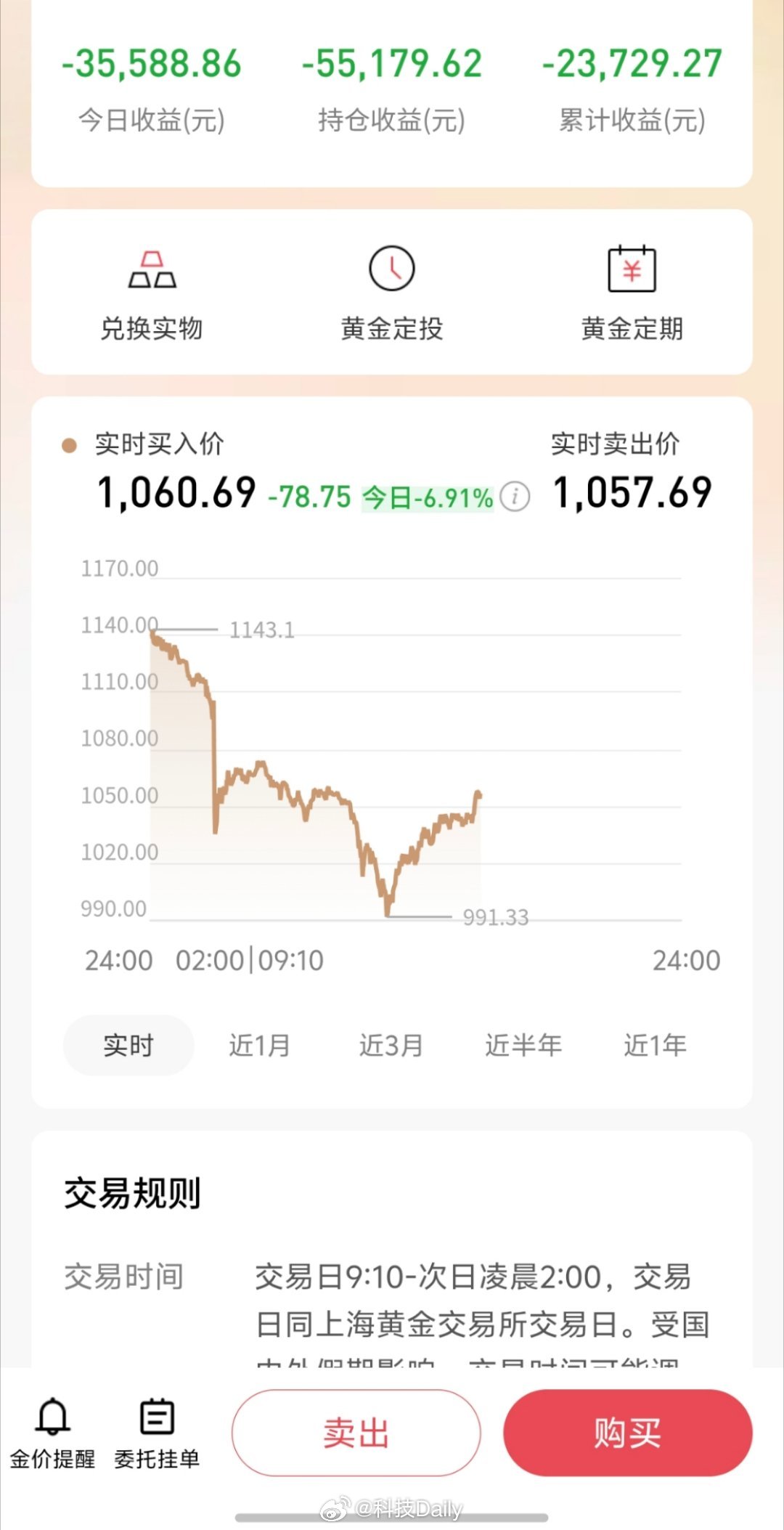
Others mocked the hype: “When everyone around you starts talking about gold, that’s when most people can’t make money” (Document 30). Market reactions were visible too. Brand gold prices fell sharply:
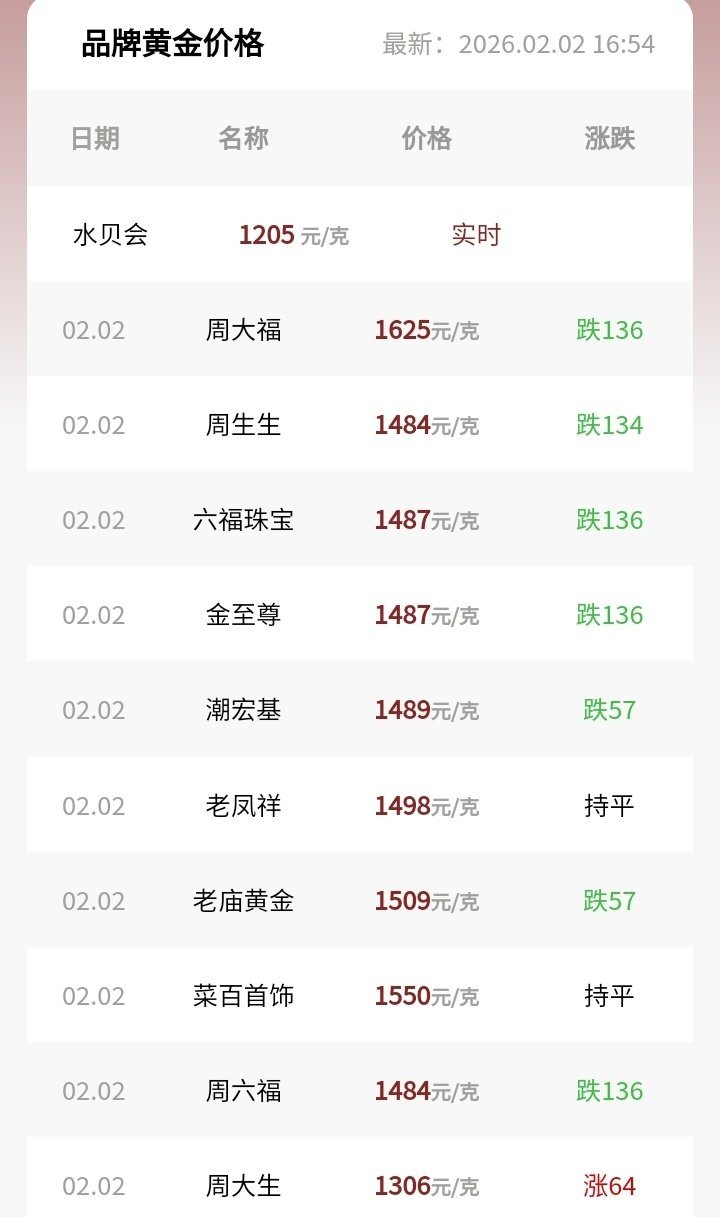
The Fade: Long-Term Uncertainty
By February 4, the conversation shifted to long-term uncertainty. One user, 曹旭在路上 (Cao Xu on the Road), wrote: “Forget gold. This precious metal speculation will enter a period of ‘price without market,’ with a long, drawn-out decline. It’s not worth it anymore” (Document 36). Another, 晓春哥XCG (Xiao Chun Ge XCG), predicted: “Gold prices hit the biggest single-day gain since 2009. I expect the base gold price to reach ¥1,400/g by the end of 2026. Let’s see if I’m right” (Document 37).
Conclusion: The Volatility of Hype and the Reality of Investing
The two-day rollercoaster on Chinese social media highlighted the gap between institutional predictions and retail investor experience. While CITIC’s optimism and Citi’s pessimism dominated the headlines, many users were left confused and hurt. The takeaway? As one user put it: “When everyone knows gold can make money, it’s time when most people can’t” (Document 30). For investors, the lesson was clear: in a market driven by hype, caution and long-term perspective are key.
Related Articles
How the Gold and Silver Price Volatility Unfolded on Chinese Social Media
By Trending on Weibo
28 Feb 2026
How Gold's Valuation Debate Unfolded on Chinese Social Media
By Trending on Weibo
28 Feb 2026
Macau's Emperor Hotel Sells 79kg of Gold Floor Tiles for Nearly $1 Billion, Raking in $90 Million Profit
By Trending on Weibo
17 Feb 2026
The Great Annual Bonus Divide: How China's Workers Are Reacting to Year-End Paydays
By Trending on Weibo
17 Feb 2026
Stellantis' Electric Vehicle Misstep: Global Fourth-Largest Carmaker Plunges After $240 Billion Write-Down
By Trending on Weibo
16 Feb 2026