Jolin Tsai's Concert Under Fire: Artistic Expression or Inappropriate Content?
Taiwanese pop icon Jolin Tsai’s recent concert has become the center of a heated debate after being reported to authorities for allegedly promoting feudal superstition and improper metaphors—sparking a backlash from fans, critics, and even her own management, which issued a stern statement denouncing the allegations as baseless.
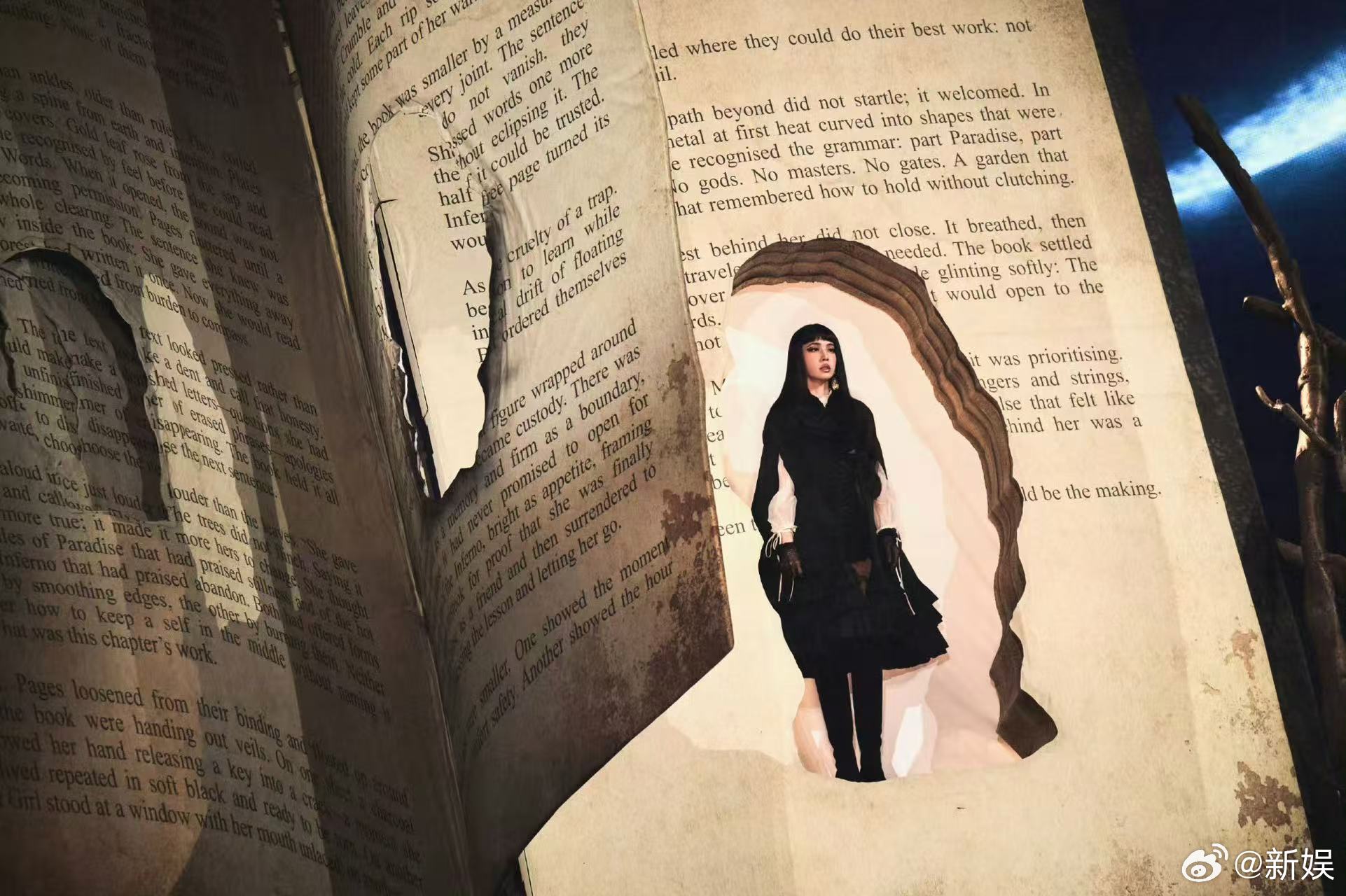
18 January 2026
Jolin Tsai’s Concert Accused of ‘Feudal Superstition’ Sparks Backlash, Prompting Official Response
Taiwanese pop icon Jolin Tsai’s recent concert has become the center of a heated debate after being reported to authorities for allegedly promoting feudal superstition and improper metaphors—sparking a backlash from fans, critics, and even her own management, which issued a stern statement denouncing the allegations as baseless.
The Allegations: What Was Reported?
The report, which circulated widely on Chinese social media, accused Tsai’s concert of featuring elements that allegedly promote feudal superstition, including “depressing, underworld aesthetics,” “Illuminati symbols,” “religious sacrifice,” and a “giant snake that steals audience luck.” One Weibo user, whose post was shared widely, wrote: “Seeing her in flesh-colored clothing stepping on a giant snake head is really uncomfortable. Her entire concert style is full of strong Western religious colors. Some say her concert is like a large-scale sacrificial ceremony—actually, that’s not wrong.” Another user joked: “The report reasons are hilarious—depressing, underworld aesthetics, Illuminati symbols, religious sacrifice, giant snake stealing luck...”
The Stage Design in Question
Tsai’s concert, known for its elaborate and fantastical stage design, included several eye-catching props that critics targeted. One of the most controversial was a giant snake prop, which Tsai reportedly stepped on during a performance. Another was a multi-armed figure, reminiscent of religious deities, which some viewers linked to “superstitious” imagery. The stage also featured a giant bull and a massive apple on a cart, all part of a narrative that blended Western and Eastern themes.
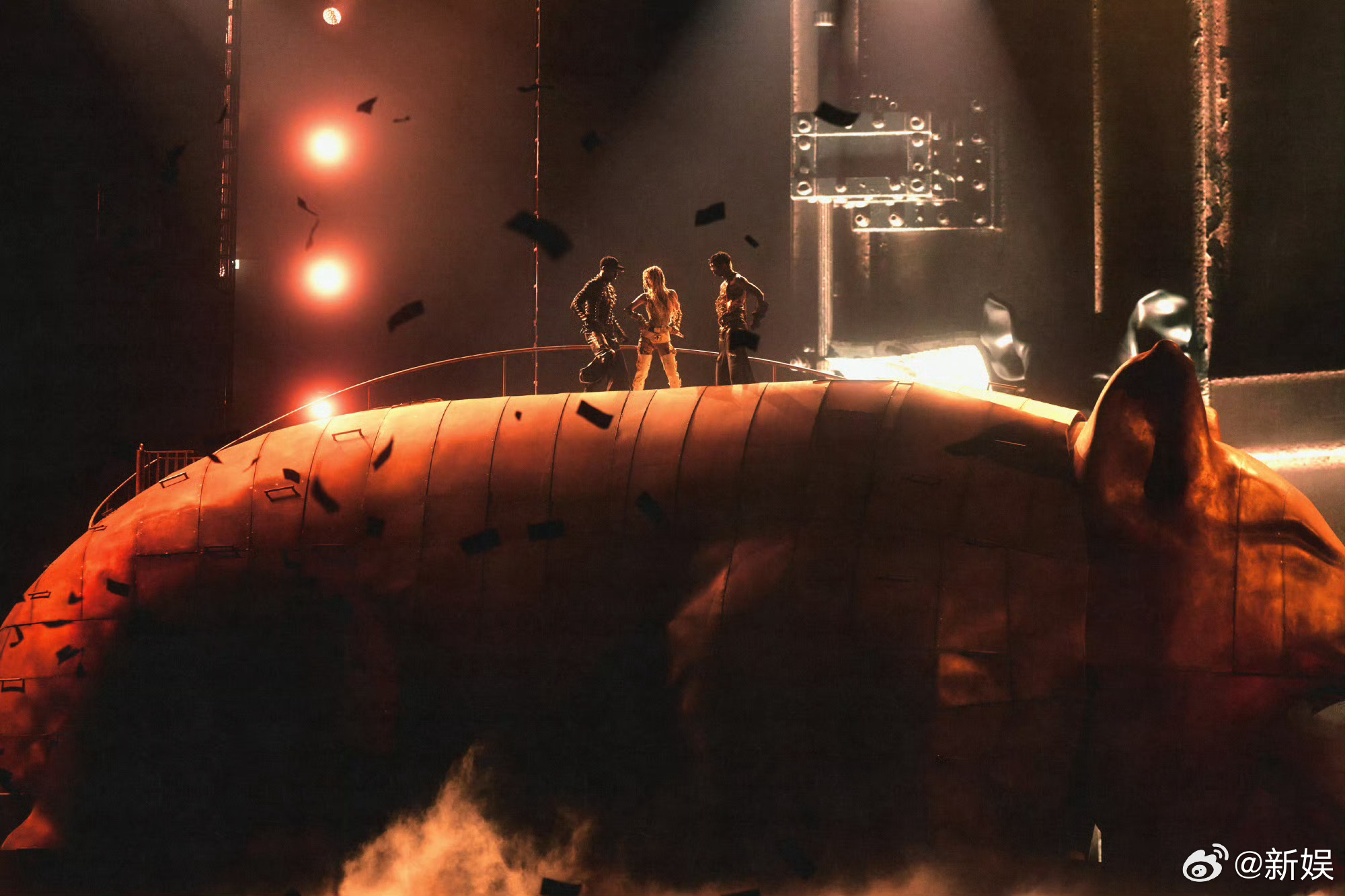
The giant snake, a central element of Tsai’s stage design, became a focal point of the criticism.
Fans, however, praised the creativity of the stage. A post from “New Entertainment” (新娱) on Weibo highlighted Tsai’s dedication: “Jolin Tsai’s stage design is so advanced and fantastical, the performance is fully committed, fully on-point singing and dancing. Every detail shows absolute respect for the stage and a 100% sincere heart for the stage.”
Management’s Response: Denouncing Falsehoods
In response to the backlash, Tsai’s management issued a formal statement, calling the allegations “malicious speculation” and “false information.” The statement, signed by her Beijing-based entertainment company, read: “Recently, some netizens have maliciously speculated, misinterpreted, and spread false, misleading information about Jolin Tsai’s concert content, seriously damaging her reputation and legal rights, and disrupting a healthy, civilized online environment.” The company vowed to take legal action against those spreading the rumors and emphasized Tsai’s status as a “prominent artist in the Chinese music industry” who “always strives to give back to the public with excellent musical works and stage performances.”
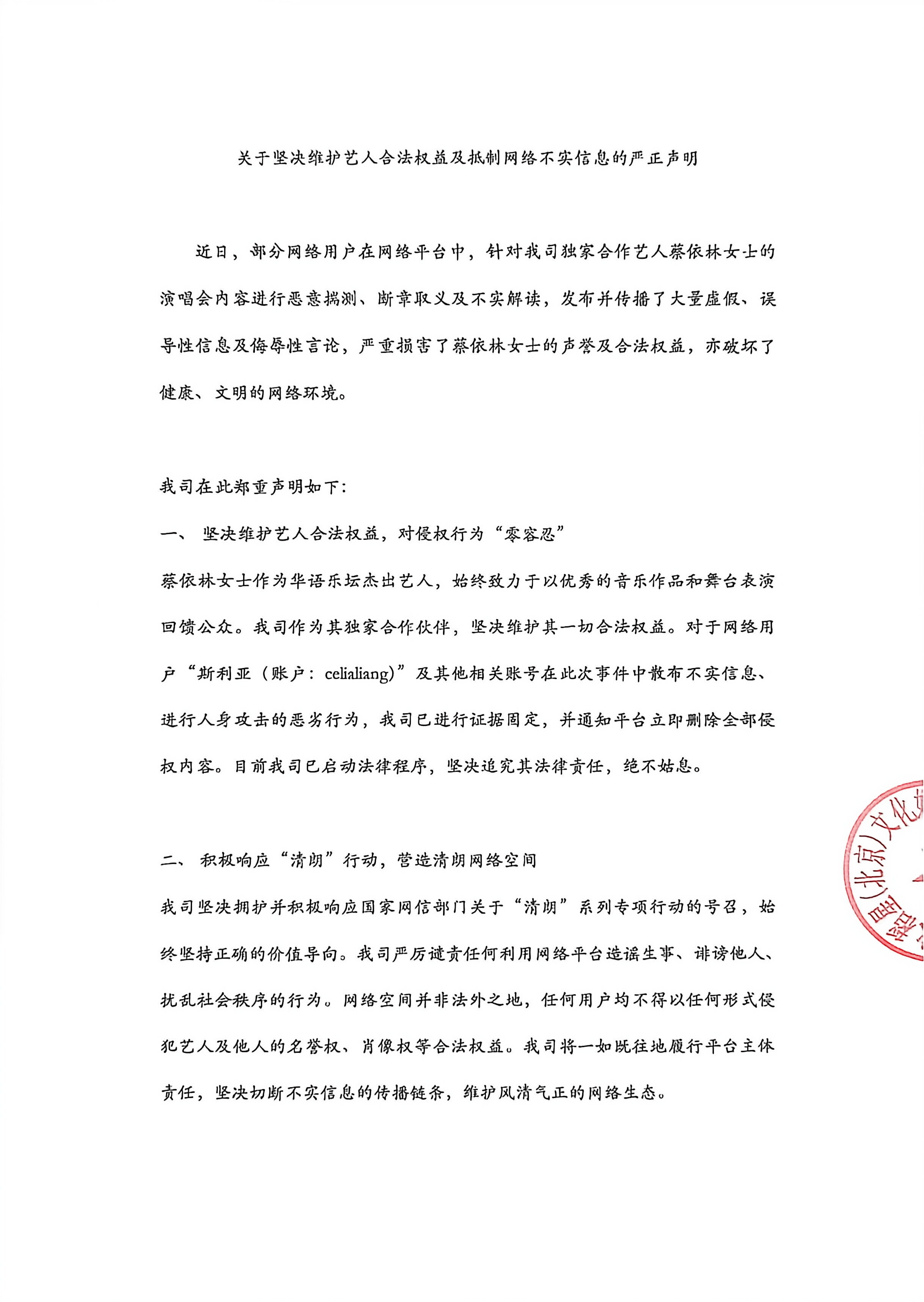
The official statement from Tsai’s management denounces the allegations as baseless.
Public Reaction: Divided Opinions
The controversy has split public opinion. While some critics argue that the stage design crosses a line, others defend Tsai’s artistic freedom. One user noted: “I think the report isn’t unfair—Taiwanese netizens reported it, and people there believe in this kind of thing more. The rule is: if it makes you uncomfortable, it’s bad for you.” Another fan expressed frustration: “Such stunning and creative stage design being reported—who is doing this? It’s hard to match foreign concert stage design.”
What’s Next?
As of now, authorities have not commented on the report, but Tsai’s management’s threat of legal action suggests the dispute may escalate. For Tsai, a veteran artist with a decades-long career, the controversy highlights the delicate balance between artistic expression and cultural sensitivity in an increasingly polarized online environment.
The debate over Tsai’s concert underscores a broader tension in Chinese entertainment: how to navigate artistic creativity while adhering to societal norms and avoiding accusations of promoting “unhealthy” content. For fans, the question remains: is the criticism justified, or is it a case of overreach? For Tsai, the answer may lie in her next move—whether to double down on her artistic vision or adjust to appease critics.
Related Articles
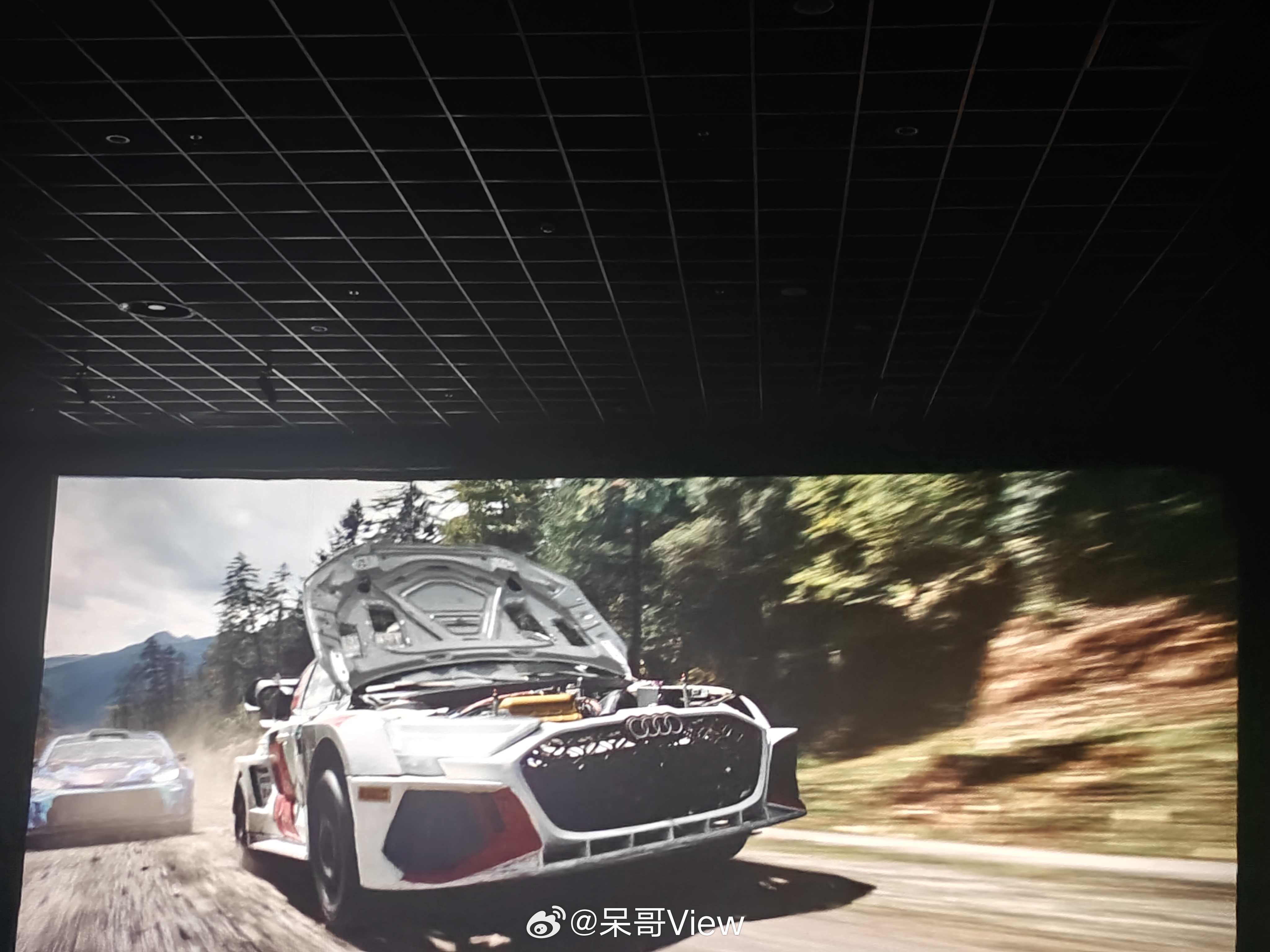
飞驰人生3: Weibo Fans Buzz About Box Office and Racing, While WeChat Users Focus on a Mountain Bike Prototype
By Trending on Weibo
Entertainment
2 Mar 2026
How the 2026 Spring Festival Gala Host Lineup Unfolded on Chinese Social Media
By Trending on Weibo
Entertainment
28 Feb 2026
How Xiao Zhan's 2026 China Network Audio-Visual Awards Appearance Unfolded on Chinese Social Media
By Trending on Weibo
Entertainment
28 Feb 2026
Xiao Zhan Steals the Spotlight at 2026 China Network Audiovisual Gala as Main Narrator and Style Icon
By Trending on Weibo
Entertainment
17 Feb 2026
2026 Spring Festival Gala Unveils Host Lineup, With Liu Xinyue as New Face in Beijing Main Venue
By Trending on Weibo
Entertainment
17 Feb 2026