From Food Safety Scare to Extortion Scheme: The Bizarre Reversals of the 'Poisoned Baby Cabbage' Case
In early February 2026, a seemingly ordinary food safety incident involving a 17.48 yuan purchase of baby cabbage from an online platform spiraled into a national controversy—marked by three dramatic reversals that exposed the fragility of public trust in the digital age. What began as a tale of contaminated produce evolved into a story of alleged marital betrayal, and finally, a calculated scheme to extort money from a small merchant. The case, which unfolded over just days, became a stark reminder of how quickly misinformation can spread—and how easily public emotion can be weaponized.
17 February 2026
From Food Safety Scare to Extortion Scheme: The Bizarre Reversals of the 'Poisoned Baby Cabbage' Case
In early February 2026, a seemingly ordinary food safety incident involving a 17.48 yuan purchase of baby cabbage from an online platform spiraled into a national controversy—marked by three dramatic reversals that exposed the fragility of public trust in the digital age. What began as a tale of contaminated produce evolved into a story of alleged marital betrayal, and finally, a calculated scheme to extort money from a small merchant. The case, which unfolded over just days, became a stark reminder of how quickly misinformation can spread—and how easily public emotion can be weaponized.
The Initial Scare: A Food Safety Crisis
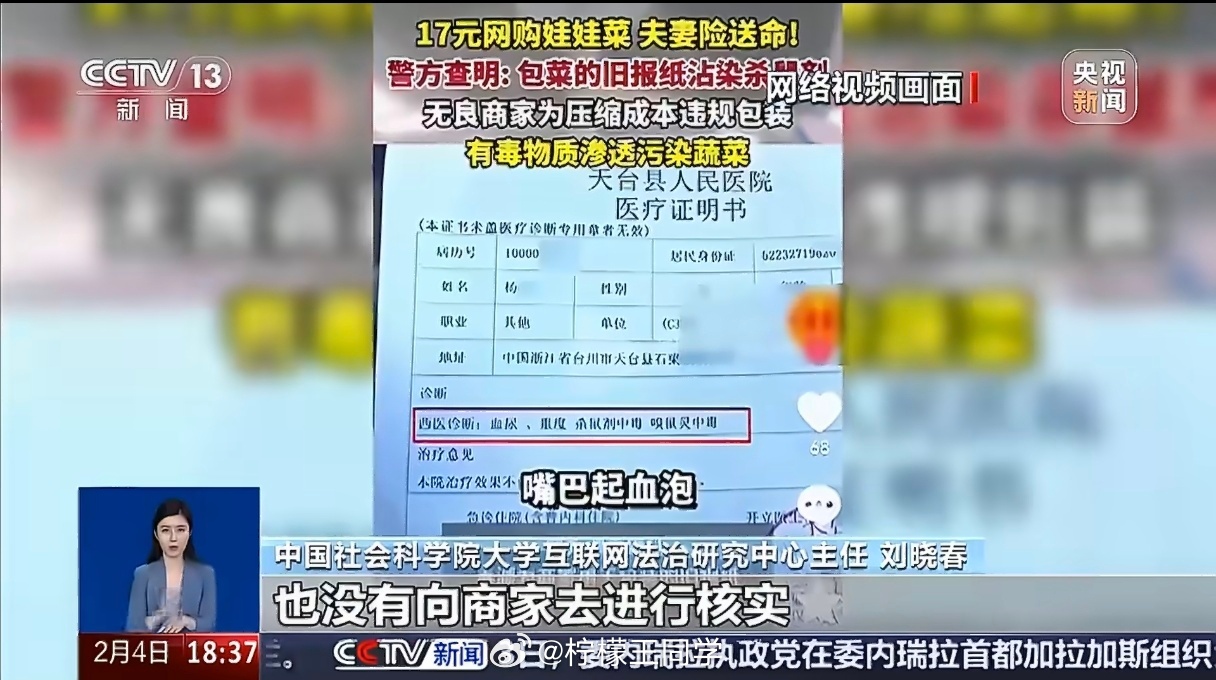
The drama started on January 23, when a couple from Tiantai County, Zhejiang Province, claimed they had been hospitalized after eating baby cabbage purchased online. Their medical records, shared widely on social media, showed symptoms of rat poison exposure, including internal bleeding and respiratory failure. The story quickly gained traction, with initial media reports blaming the merchant for using contaminated newspaper packaging to save costs.
As the news spread, public outrage was swift. Netizens flooded the merchant’s online store with angry reviews, and the business was forced to shut down. "How could a merchant be so reckless with people’s lives?" one user wrote. "This is a crime!" The incident also sparked broader anxiety about the safety of online food purchases, with many vowing to avoid similar products.
First Reversal: From Merchant to Husband
Just days later, the narrative took a shocking turn. On February 3, several media outlets reported that the husband, not the merchant, had poisoned his wife. Citing unnamed sources, they claimed he had added rat poison to the cabbage during meal preparation, turning the story into a domestic violence case. The public’s anger shifted: from the merchant to the husband, with many calling for legal action against him.
"This is a real-life ‘Gone Girl’!" one Weibo user exclaimed. "First the merchant, now the husband—what’s next?"
But the reversal was short-lived. Within hours, local police issued a statement denying the husband’s involvement, calling the reports "unfounded." The confusion only deepened, leaving the public wondering who to believe.
The Final Truth: A Calculated Extortion Scheme
On the same evening, Tiantai County Police released a bombshell: the entire incident was a fraud. The couple had conspired to fake the poisoning, using rat poison to create a medical emergency and extort money from the merchant or the online platform. Both were arrested on suspicion of extortion.

The revelation stunned the nation. "I can’t believe they would risk their lives for money," a netizen wrote. "This is beyond crazy."
According to police, the couple had been struggling financially and saw the "poisoned cabbage" story as a way to make a quick buck. They purchased the cabbage, applied rat poison, and then sought medical treatment to create a credible narrative. Their plan backfired when police uncovered the truth through forensic analysis and witness interviews.
Media's Role: Rushing to Judgment
The case highlighted a critical issue in modern journalism: the pressure to break news first, often at the expense of accuracy. Many outlets reported the initial claims and the "husband poisoning" theory without verifying facts, relying on unconfirmed sources or social media rumors.
"Some media outlets prioritized speed over truth," a CCTV commentator noted. "They didn’t wait for official confirmation, and the public paid the price."
When the final truth emerged, several outlets quietly deleted their earlier reports, but the damage was done. The merchant, who had already lost his business, faced lasting reputational harm.
Public Reaction: Emotions vs. Facts
The public’s emotional rollercoaster was palpable. From sympathy for the "victims" to anger at the husband, and finally, disbelief at the couple’s scheme, netizens reacted with a mix of outrage and bewilderment.
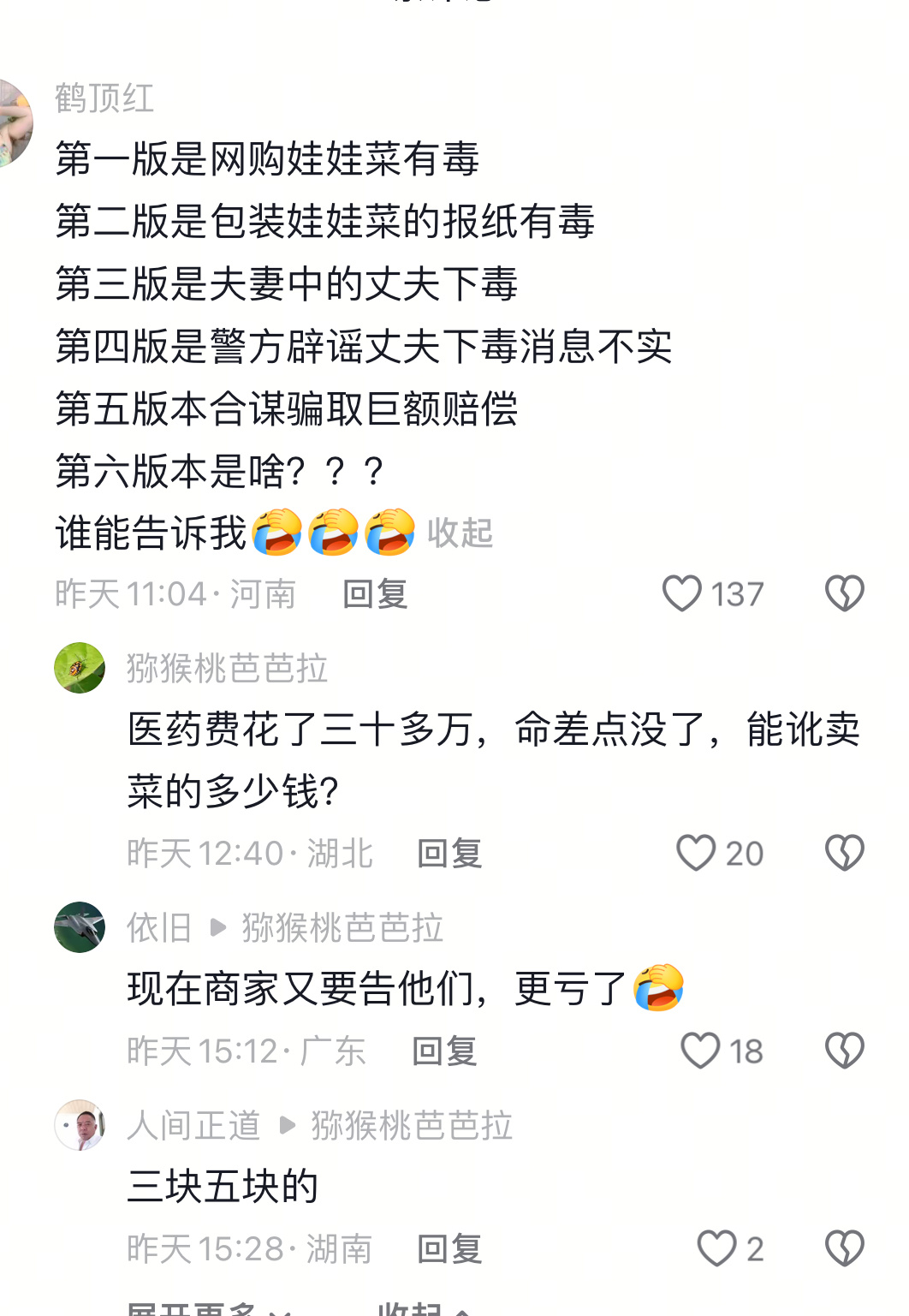
"This is like a soap opera," one user joked. "I don’t know what to believe anymore."
Others expressed frustration at the erosion of trust. "Next time I see a news story, I’ll wait for the police to confirm it," another wrote. "I’m tired of being misled."
The Cost of Misinformation: Trust Eroded
The baby cabbage case had far-reaching consequences. For the merchant, it meant financial ruin and a damaged reputation. For the public, it eroded trust in both online food safety and media reporting.
"This incident will make people more skeptical," a food safety expert warned. "When the next real crisis happens, will anyone believe it?"
The couple now faces criminal charges, but the damage to public trust may be harder to repair. As one Weibo user put it: "The real poison here wasn’t the cabbage—it was the lies."
In the end, the case served as a cautionary tale about the dangers of misinformation in the digital age. It reminded us that in a world where news travels at the speed of light, patience and skepticism are more important than ever. The truth, as it turned out, was not in the first story, or the second—but in the one that took time to uncover.
Related Articles
How the 'BLG vs. AL' Match Unfolded on Chinese Social Media
By Trending on Weibo
Sports
28 Feb 2026
From Food Safety Scare to Extortion Scheme: The Bizarre Reversals of the 'Poisoned Baby Cabbage' Case
By Trending on Weibo
Sports
17 Feb 2026

Eileen Gu Takes Silver in Milan Olympics Slopestyle, Emotions Run High After Fall and Comeback
By Trending on Weibo
Sports
17 Feb 2026
KPL and LPL Matches Highlight Dramatic Wins and Player Health Concerns
By Trending on Weibo
Sports
17 Feb 2026

Wang Chuqin Clinches Asian Cup Title, Defeats Harimoto in Thrilling Final
By Trending on Weibo
Sports
17 Feb 2026