Sichuan University Professor Faces 83-Page Allegations of Academic Misconduct, Financial Irregularities from Students
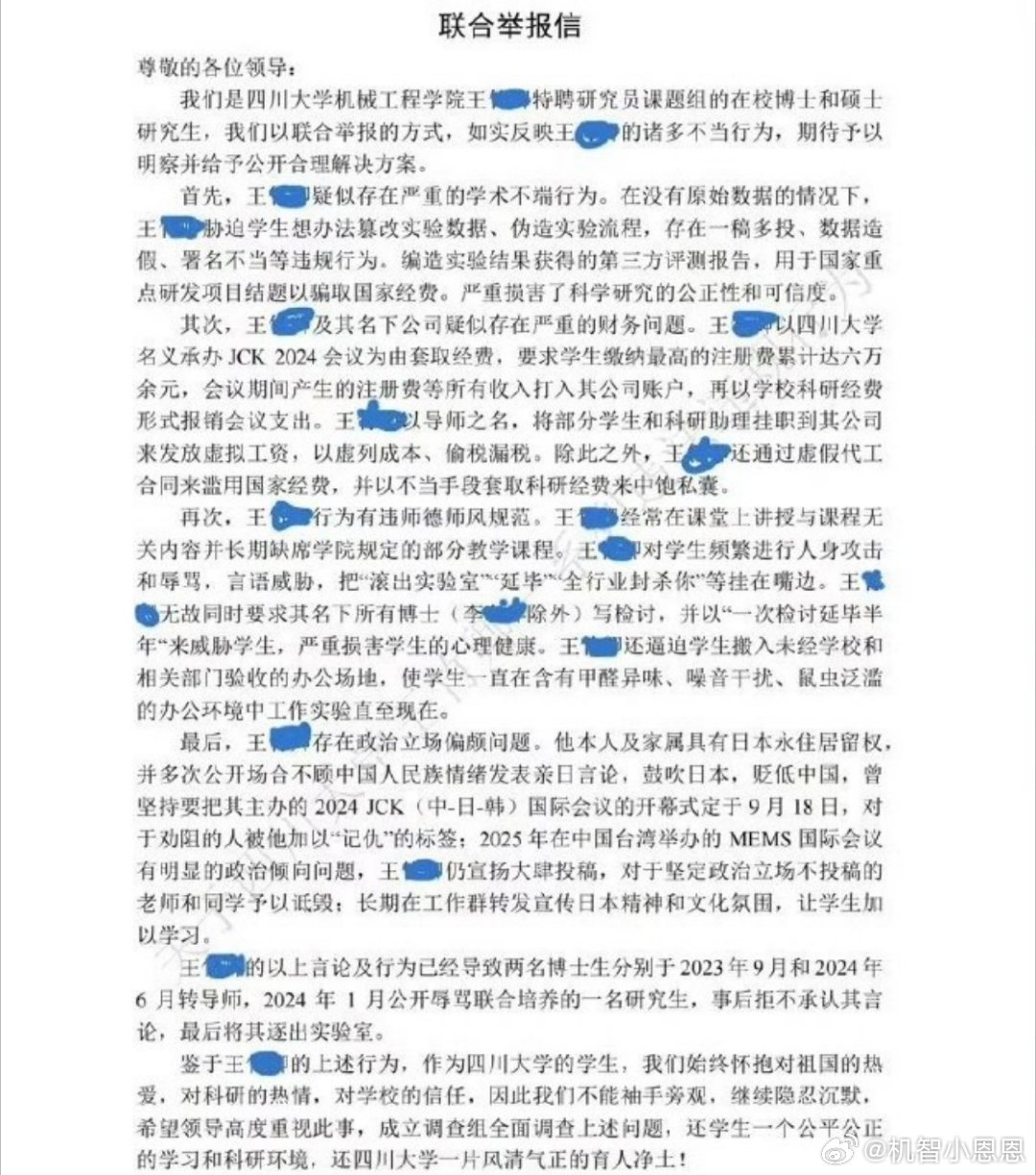
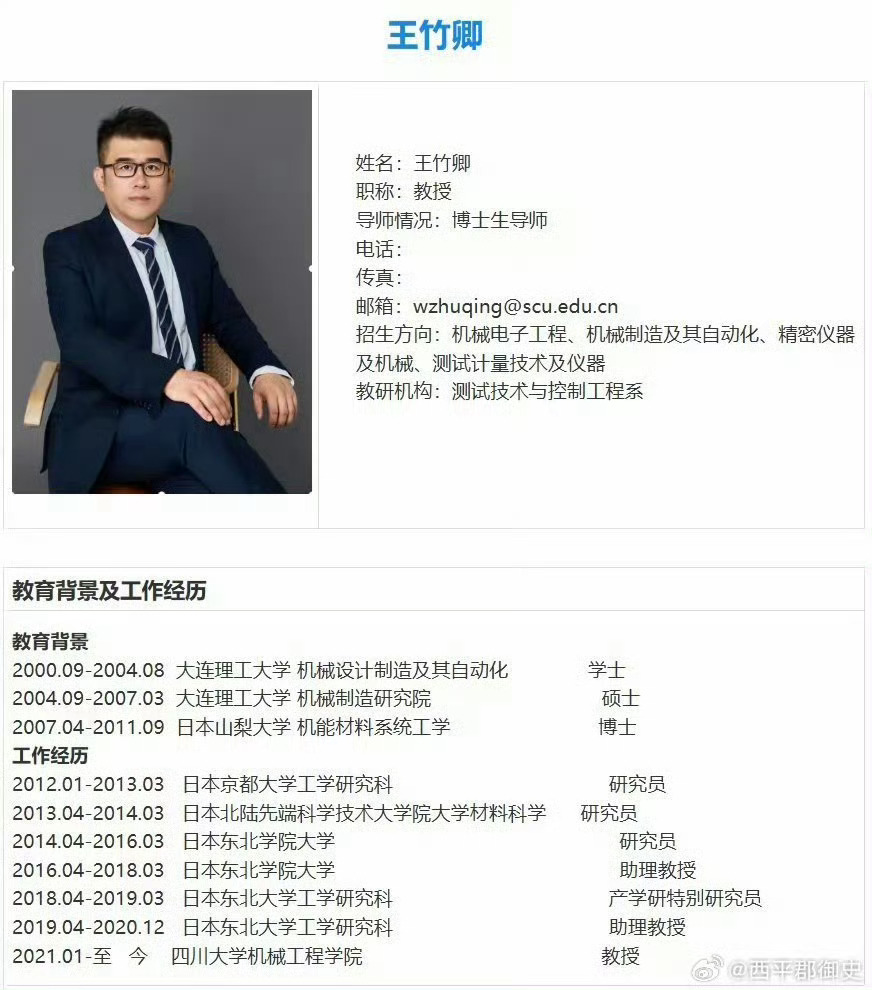
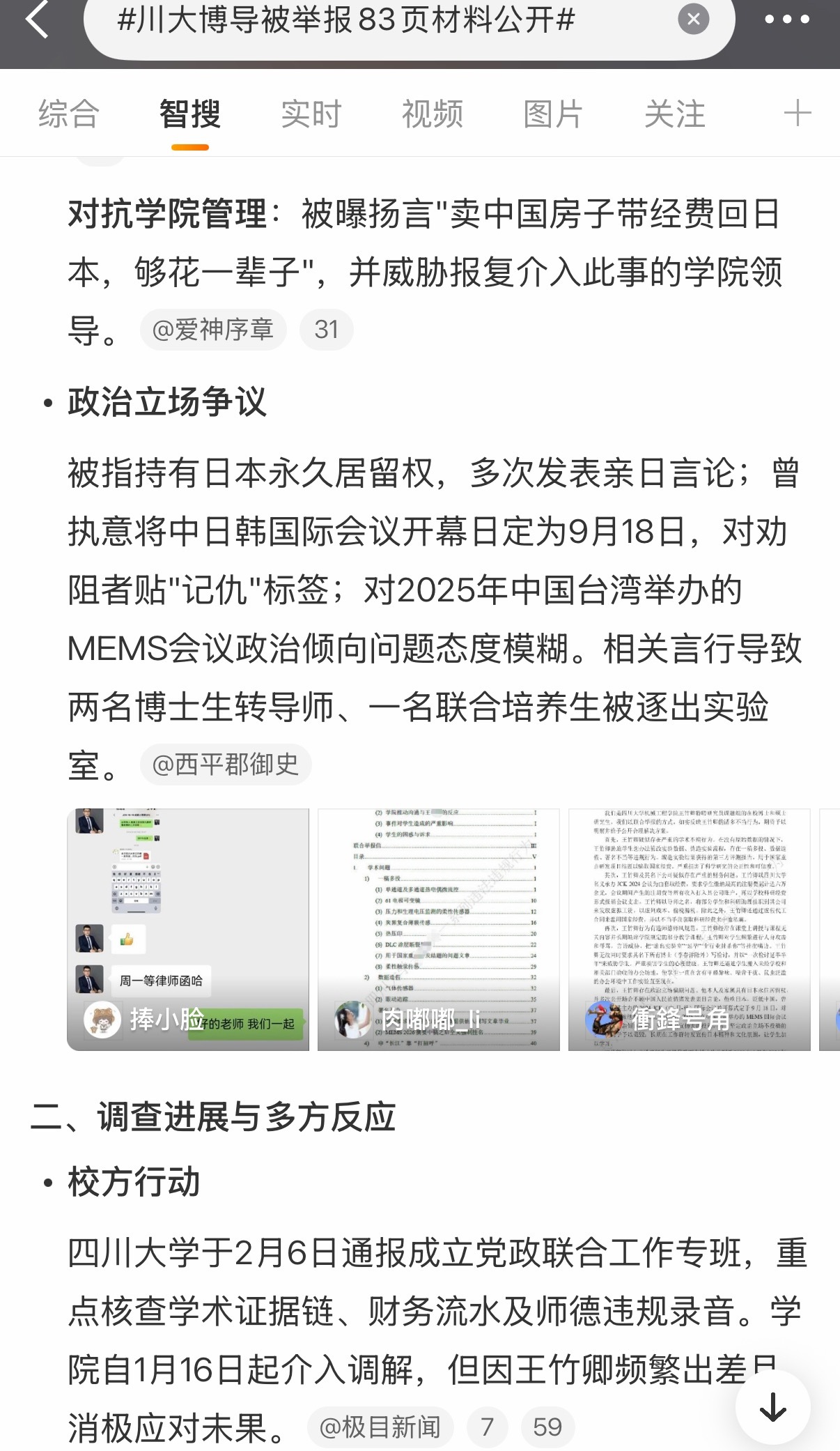
A group of eight graduate students at Sichuan University has filed a detailed 83-page report accusing their professor, Wang Zhuqing, of academic misconduct, financial irregularities, and unethical behavior, sparking widespread attention and prompting the university to launch an investigation. The allegations, which include claims of data fabrication, misappropriation of research funds, and verbal abuse, have reignited debates about academic integrity and power dynamics in Chinese higher education.
16 February 2026
A group of eight graduate students at Sichuan University has filed a detailed 83-page report accusing their professor, Wang Zhuqing, of academic misconduct, financial irregularities, and unethical behavior, sparking widespread attention and prompting the university to launch an investigation. The allegations, which include claims of data fabrication, misappropriation of research funds, and verbal abuse, have reignited debates about academic integrity and power dynamics in Chinese higher education.
Timeline of Events
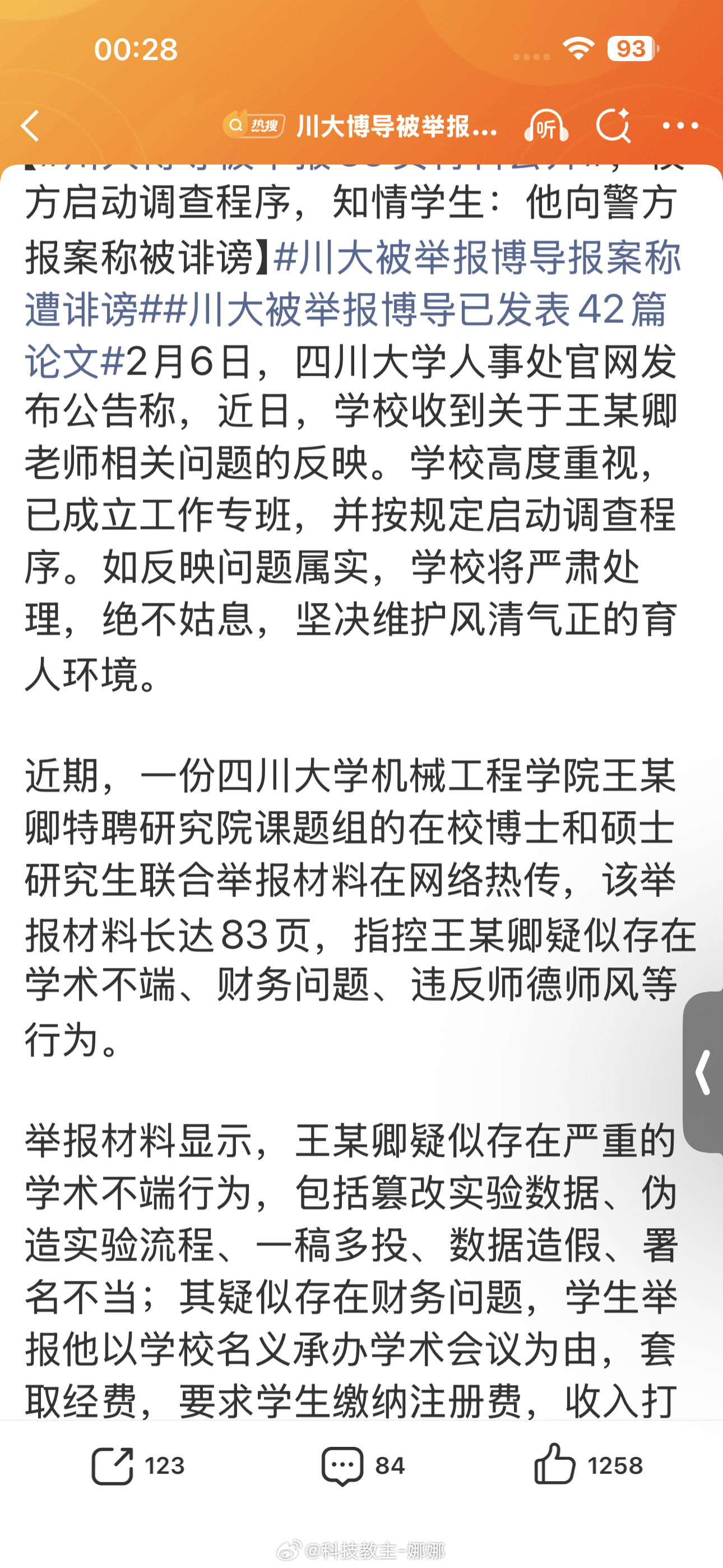
The controversy began on January 16, when the students formally reported their concerns to the university's School of Mechanical Engineering. On February 5, the 83-page report was made public online, triggering a surge of discussion on social media. The next day, Sichuan University announced it had established a special task force to investigate the allegations, stating that if the claims were substantiated, it would take "serious action without leniency."
Key Allegations
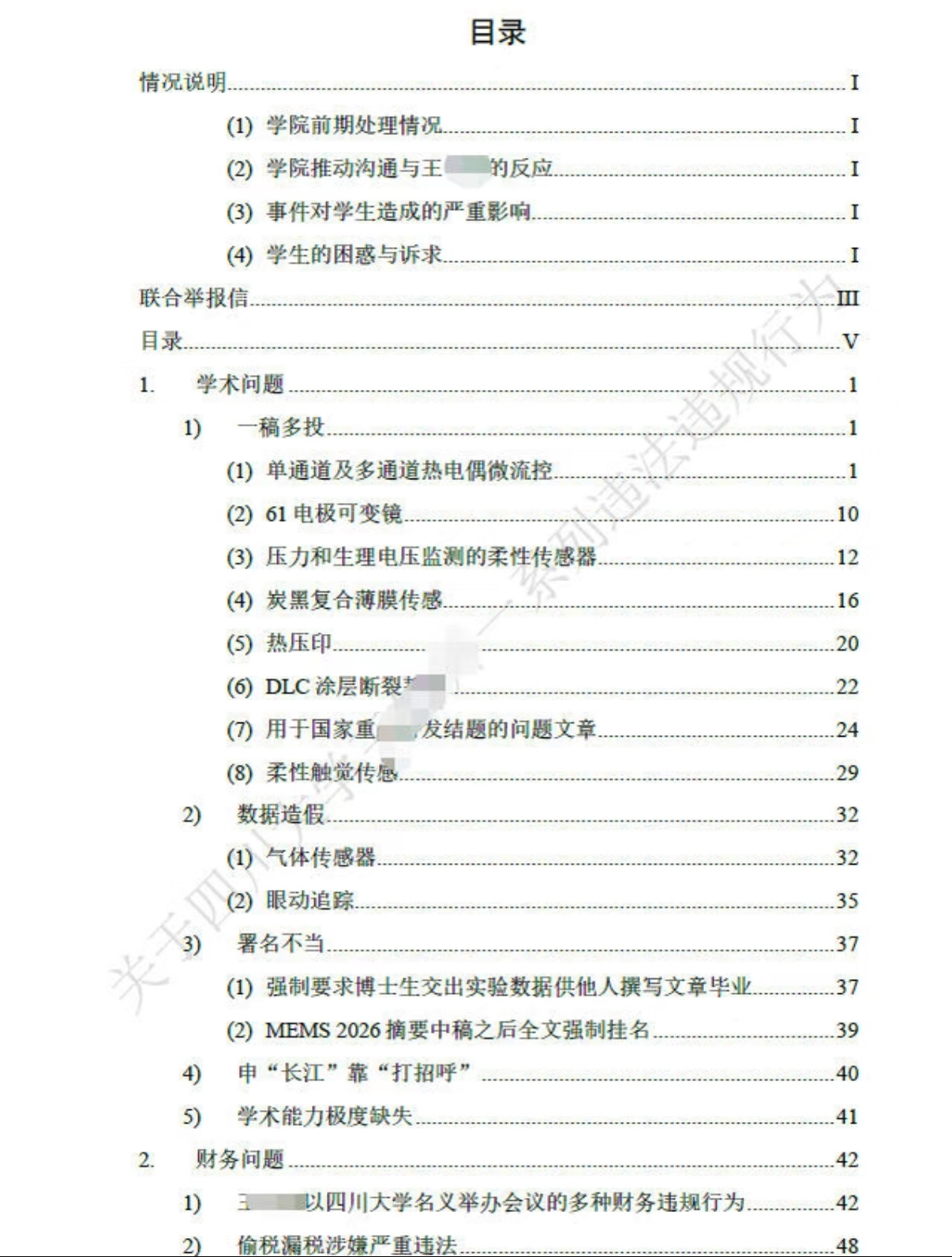
The report, titled "Joint Report on the Academic, Financial, and Ethical Misconduct of Professor Wang Zhuqing," outlines several serious accusations:
-
Academic Misconduct: The students allege that Wang pressured them to falsify experimental data, fabricated research processes, and engaged in "one paper, multiple submissions" (一稿多投). They also claim he forced students to list him as a co-author on papers without contributing to the work.
-
Financial Irregularities: The report accuses Wang of using the university's name to host a conference (JCK 2024) and then siphoning registration fees into his personal company. It also claims he misused research funds by paying students' salaries through his company and evading taxes.
-
Ethical Violations: The students allege that Wang frequently insulted and threatened them, including saying he would "destroy their careers" if they resisted. They also claim he held meetings in a lab with poor ventilation and pest infestations, endangering their health.
"This is not just about one professor—this is about the power imbalance in academia," said a Weibo user who shared the report. "Students are afraid to speak up, but these eight were brave enough to take a stand."
Public Reaction
Social media has been flooded with comments supporting the students. Many users praised their courage, while others expressed skepticism about whether the university would take meaningful action. One user wrote: "If the university doesn't handle this properly, it will send a message that professors can get away with anything."
University Response
Sichuan University's statement, released on February 6, acknowledged the allegations and promised a thorough investigation. "The university takes these matters seriously and will conduct a comprehensive review," the statement said. "We are committed to maintaining a clean and upright educational environment."
Broader Context
The case highlights ongoing concerns about academic integrity in China. In recent years, several high-profile cases of misconduct have emerged, leading to calls for stronger oversight and better protection for students. Experts say that while universities are taking steps to address these issues, more needs to be done to empower students and ensure accountability.
As the investigation unfolds, many are watching closely to see if Sichuan University will follow through on its promise to hold Wang accountable. For the students involved, the outcome could set a precedent for how future cases of academic misconduct are handled.